How to play Tawla 31
Tawla 31 is the Middle Eastern version of backgammon. It uses the same board and the same two dice, but the setup, the movement and the scoring are all different. These are the full rules as the game is actually played.
The goal
Move all fifteen of your checkers around the board and bear them off before your opponent does. Winning a round scores you points, and the first player to reach 31 points wins the match. That is where the name comes from.
Setup
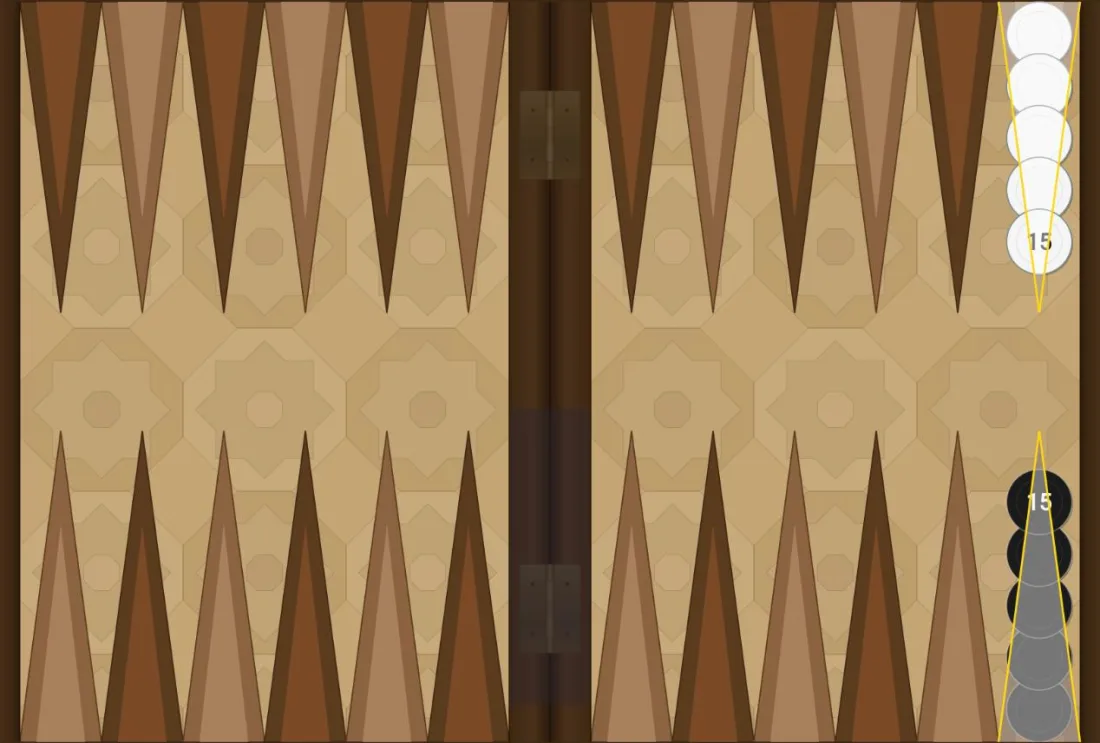
All fifteen of your checkers begin stacked on a single point in your home corner, called the Beit. Your opponent's fifteen start in the corner diagonally opposite. This is the first thing that surprises backgammon players: there is no opening spread across the board.
From there you travel in one direction only, from your corner toward your opponent's. You never move backwards.
The opening requirement
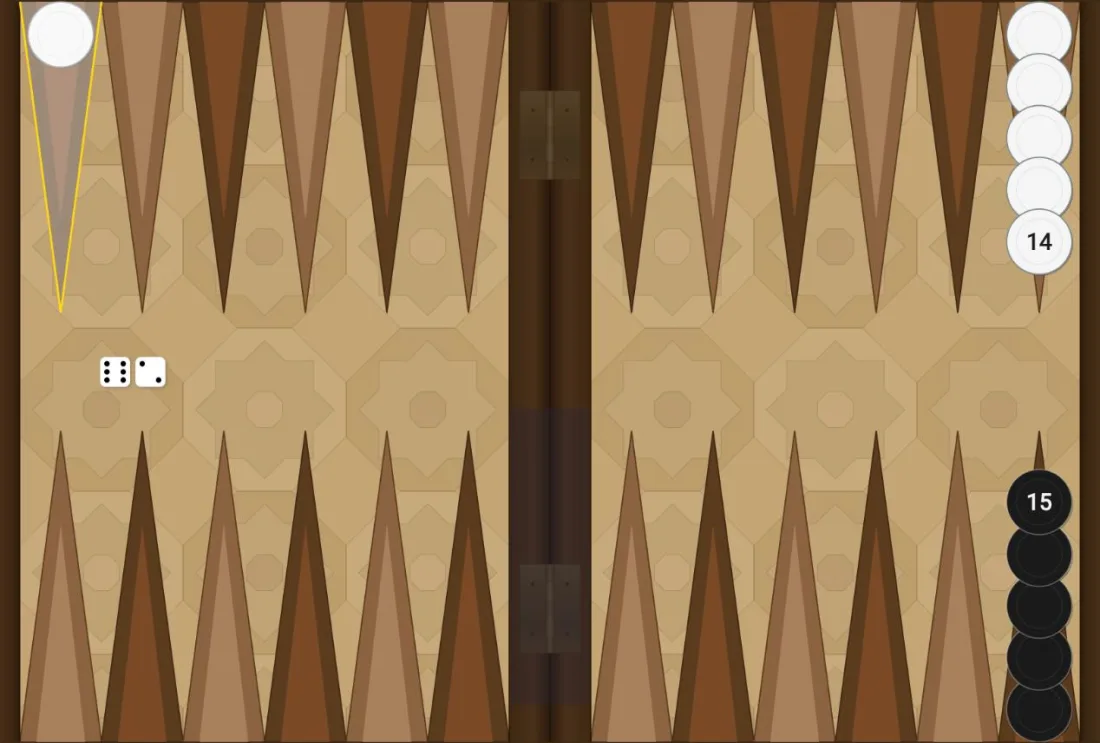
Before you can move freely, one of your checkers has to reach the far quarter of the board, which is your opponent's starting corner. Until it arrives, only your leading checker may move, on every roll.
This is the rule newcomers get wrong most often. Reaching the halfway point is not enough. The checker has to land in that final quarter before the rest of your stack is released.
Moving
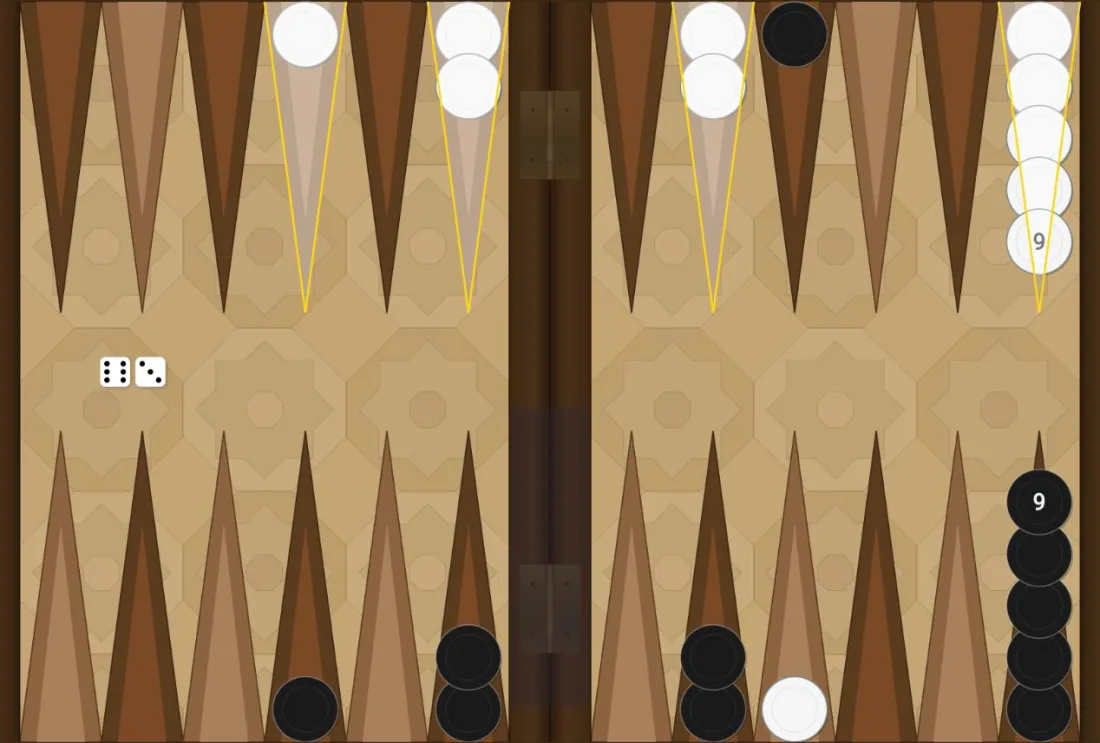
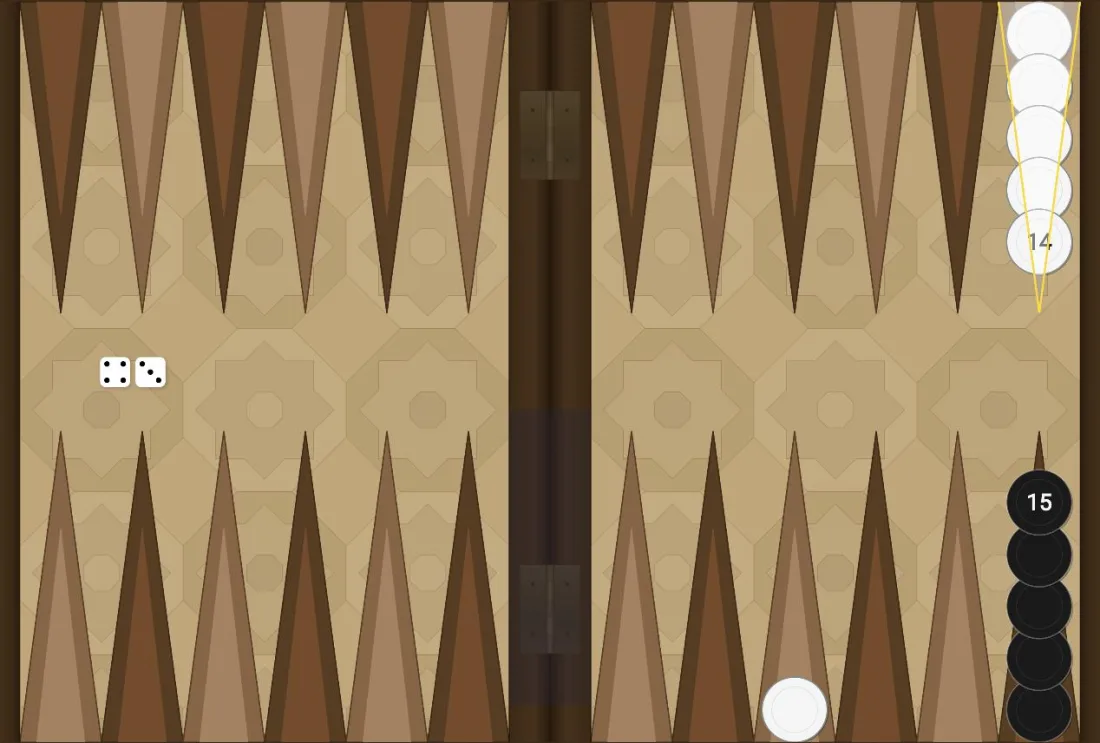
Roll two dice and move by the numbers shown. You can play them on two different checkers, or play both on one checker.
If you use both dice on the same checker, the point it touches down on in between still has to be open. You cannot jump over a blocked point just because the total distance would be legal.
Doubles
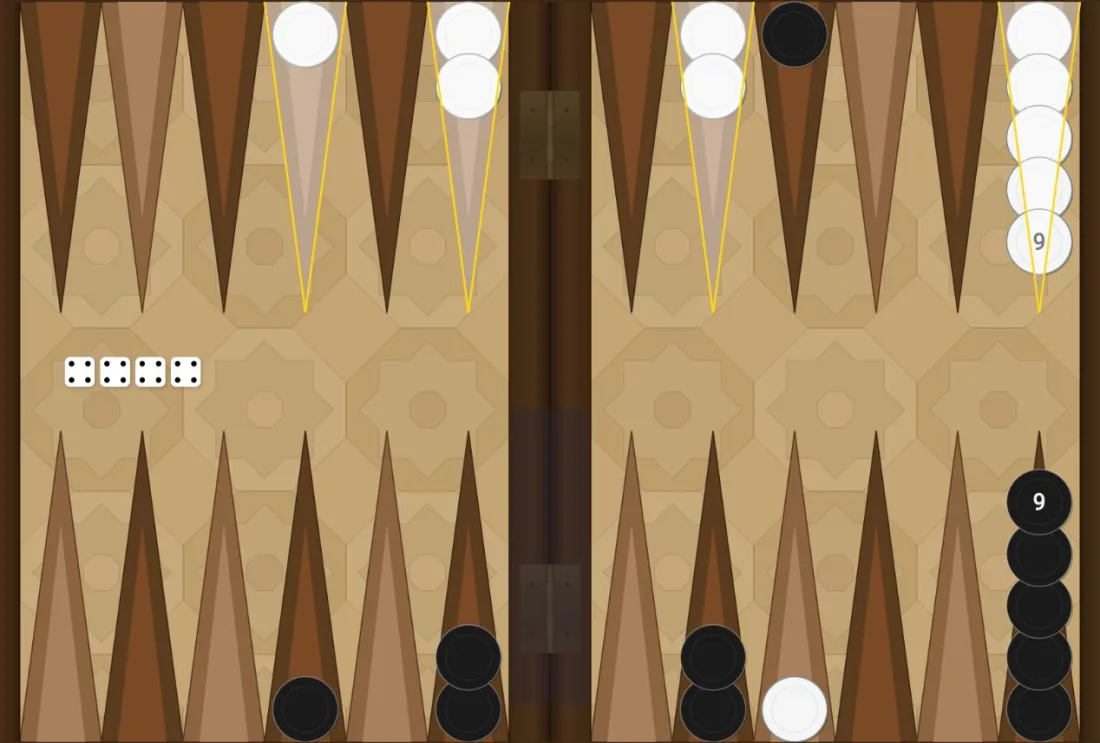
Rolling the same number on both dice gives you four moves of that value rather than two. Double 5 is four moves of five, not two.
No hitting
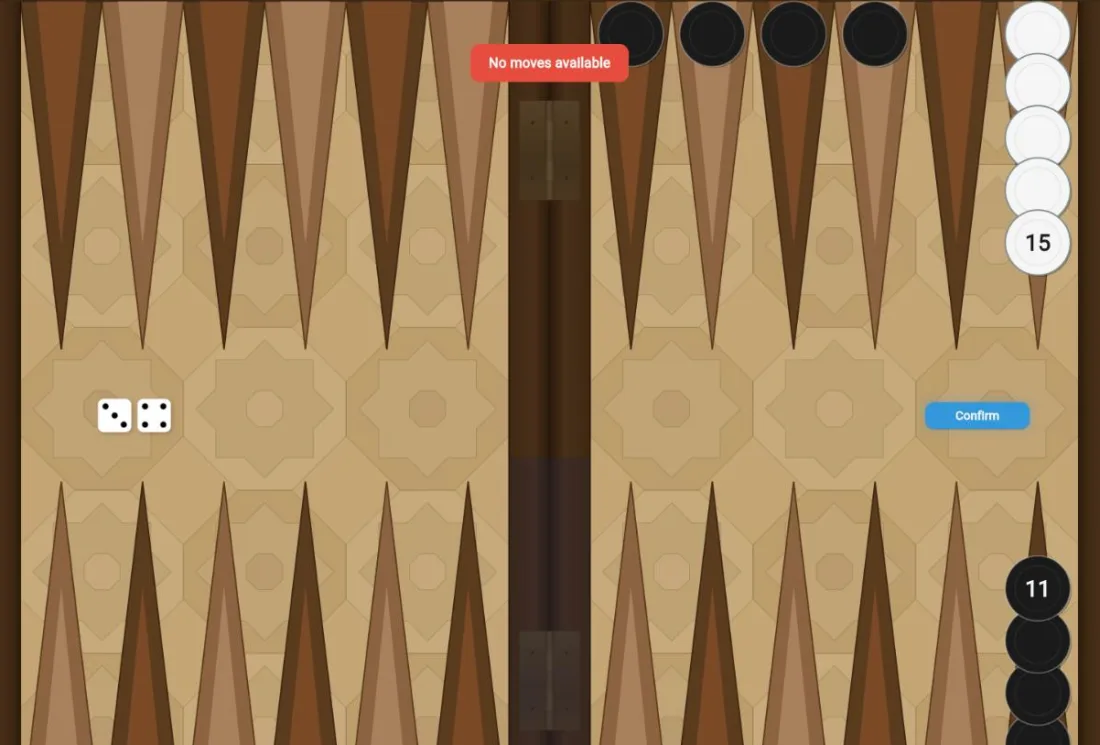
You can never land on a point your opponent holds, not even one with a single checker on it. There is no bar, and no checker is ever sent back to the start.
That has a consequence worth understanding. A wall of opponent checkers does not merely slow you down. It can leave you with no legal move at all, and your turn simply passes.
Use as many dice as you can
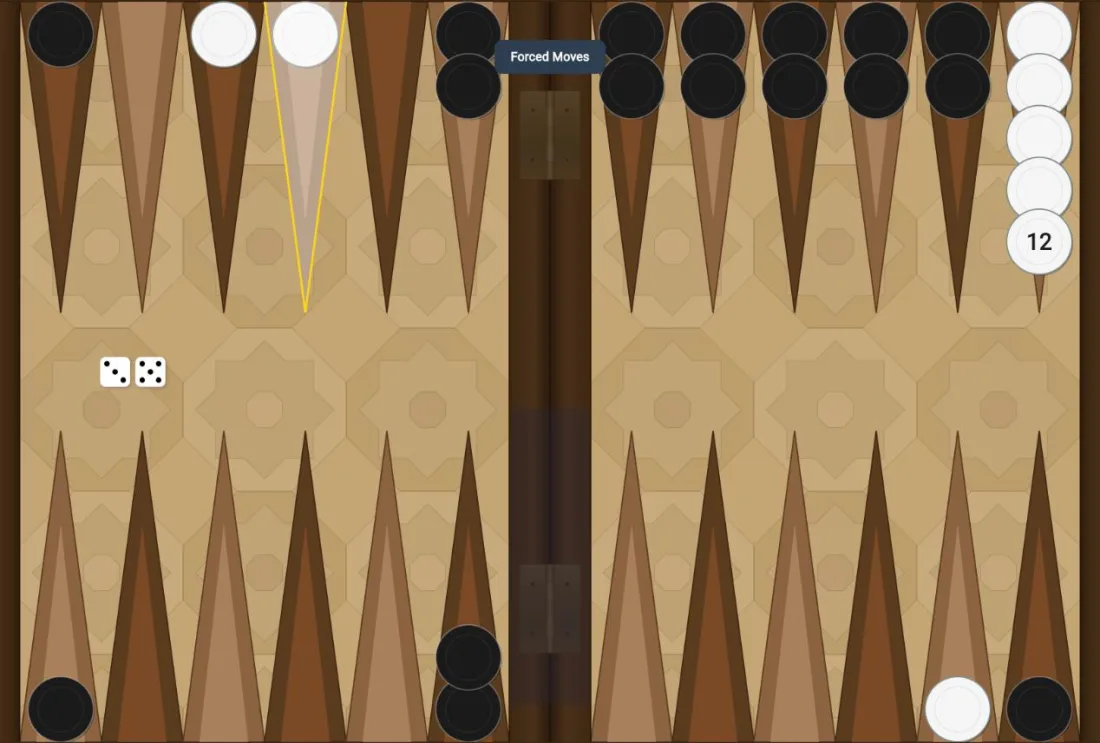
You must play as many dice as the position legally allows. Declining a move you would rather not make is not an option.
The order can matter. Sometimes playing the higher number first strands the lower one, while playing them the other way round lets you use both. If a sequence exists that plays more dice, that is the sequence you have to find.
If only one of the two numbers can be played at all, you choose which one. There is no requirement to take the higher value.
Bearing off
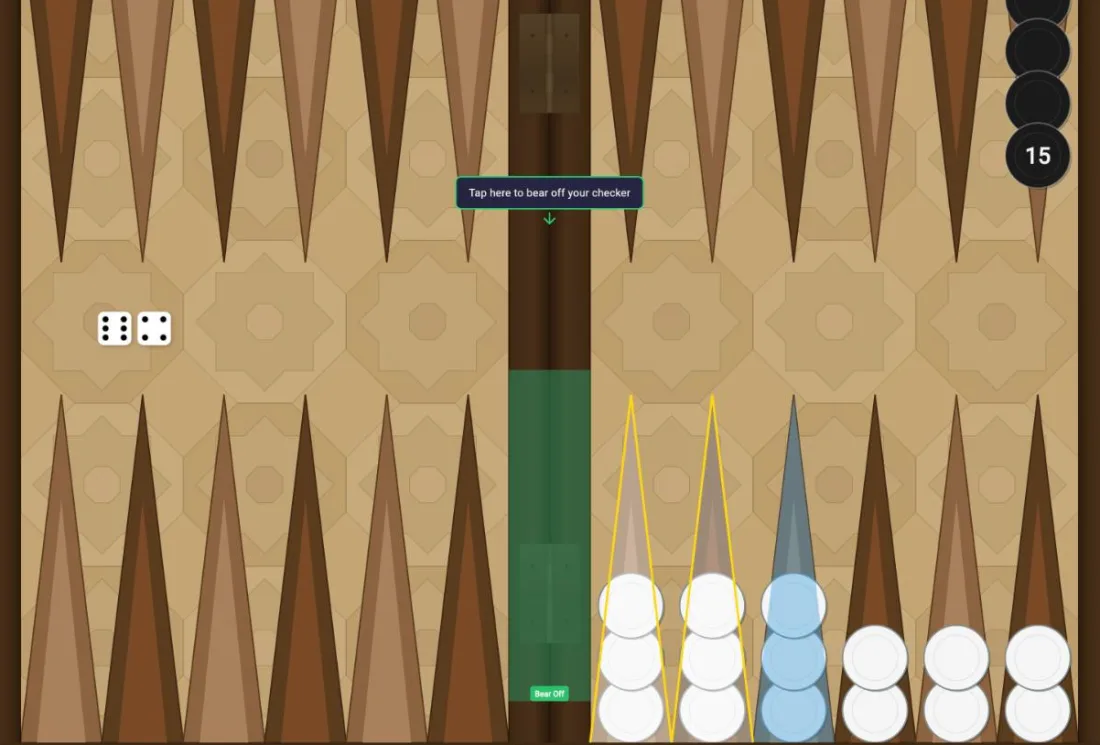
Once all fifteen of your checkers are in the final quarter, you can start taking them off the board. Three cases cover every roll:
- A number that exactly matches a checker's distance bears that checker off.
- A number higher than your furthest checker bears that furthest checker off.
- A number lower than your furthest checker cannot bear anything off. You have to play it as a move inside the quarter.
Scoring
When you bear off your last checker the round ends, and you score one point for every checker your opponent still has on the board. A close round might be worth two or three points. A one-sided one can be worth ten or more.
The winner of a round starts the next one. Play continues, round after round, until somebody reaches 31 points and takes the match.
How it differs from standard backgammon
| Backgammon | Tawla 31 | |
|---|---|---|
| Setup | Spread over four points | All 15 in one corner |
| Direction | Toward your own home | Toward your opponent's corner |
| Hitting | Blots are sent to the bar | No hitting at all |
| Opening | No restriction | Lead checker must cross first |
| Doubles | Four moves | Four moves |
| Match | Points and a doubling cube | First to 31, no cube |
Play Tawla 31 now